Challenges in refrigeration monitoring
Industrial and Commercial refrigeration is a $100b+ industry. Customers are generally large, deep-pocketed companies with regular budget cycles that, on paper, are the ideal candidates for digital transformation. However, while waves of innovation like Industry 4.0 and programs such as Horizon 2020 had profound effects on other sectors, the refrigeration sector remains mostly untouched.
Remote monitoring
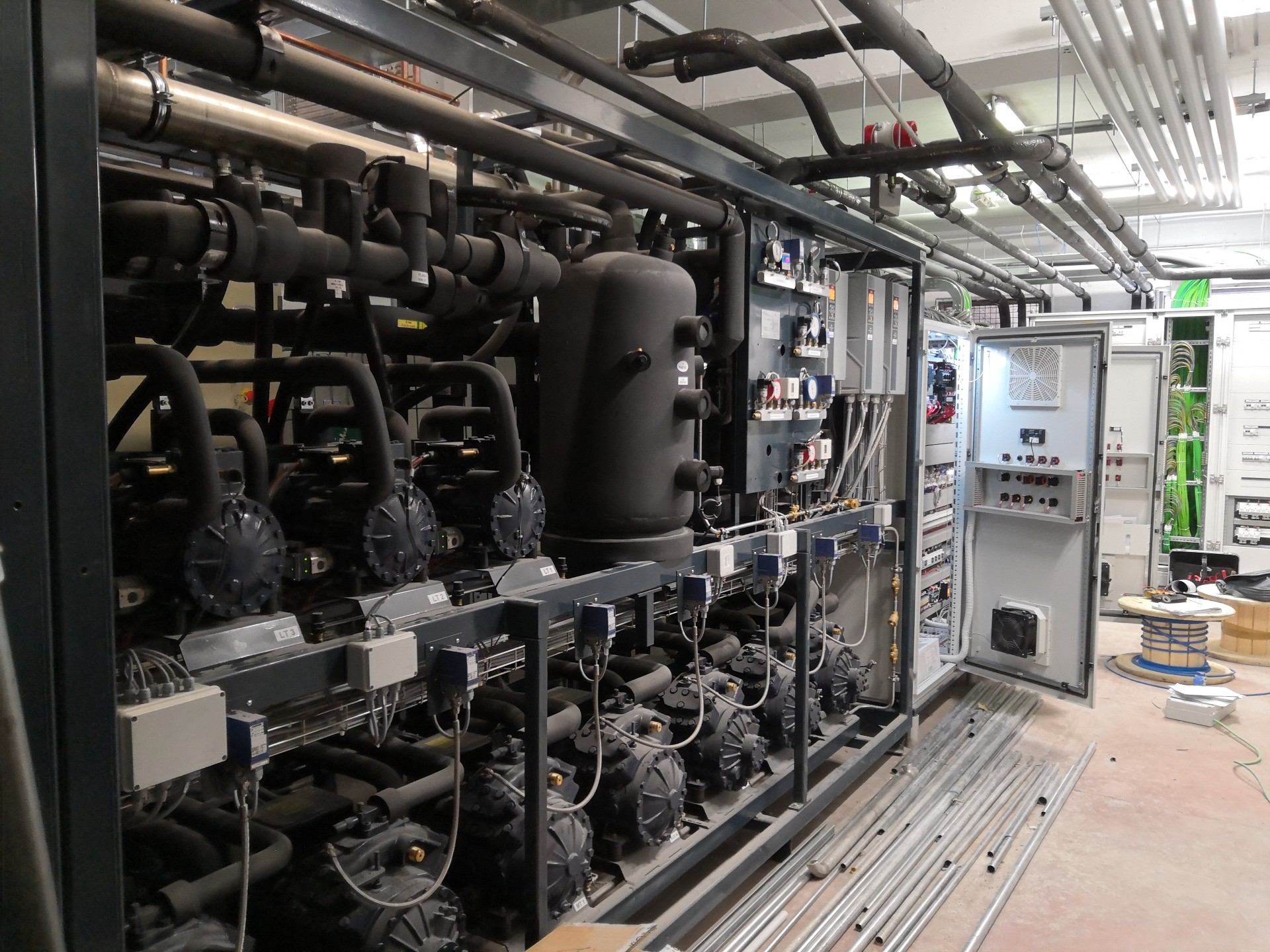
The most classic case of this disconnec is remote monitoring. In fact, when trends like the Internet of Things gained popularity by promising a future where every device would be connected to the cloud, the main doubts were about the associated costs. In fact, no matter how cheap data bundles and hardware get, not all devices need to be connected to the internet. On the other hand, industrial and commercial refrigeration, being a comparatively "wealthy" sector, should not have much trouble covering the cost of bringing online pieces of equipment that are easily woth $200,000+. This should be especially true in a sector where downtime usually corresponds to non-negligible losses. Yet, it's 2022, and those same companies whose supermarkets where so quick to adopt automatic checkouts have done little to collect and store data about their machinery. In fact, data produced by commercial and industrial machinery is still tragically hard to retrieve. Is it really just about costs then?
Main causes
-
The one-time-fee curse. The core tension is really about payment structures. Medium and large businesses have a strong incentive to be as independent as possible and own as much as possible of the vertical. This clashes with the recurring payment structure that is typical of the monitoring world. SaaS (Software as a Service) models are often viewed as a "tax" rather than a tool, leading many firms to prefer a decaying, offline asset they own over a superior, connected one they have to rent.
-
Hardware vendor lock-in. Another problem is the fact that component manufacturers (compressors, inverters, PLC systems) have a strong incentive to try and build their own walled gardens. By using proprietary communication protocols instead of open standards like Modbus or MQTT, they force the customer into using their specific monitoring software. This creates a fragmented ecosystem where a supermarket manager might need five different apps to check the health of a single cold room.
-
Perceived added value. If component manufacturers and software providers cannot bridge the gap between data and insights, the investment feels hollow. In many cases, monitoring systems are sold as simple alarm triggers — telling a manager the temperature is too high after the inventory has already begun to spoil. Without predictive maintenance or clear energy-saving metrics, the ROI (Return on Investment) remains theoretical in the eyes of the budget holders.
-
If it ain't broke mentality. Unlike consumer electronics, industrial refrigeration assets are built to last 15 to 20 years. This long lifecycle creates a massive "brownfield" problem. Integrating modern IoT sensors with a compressor built in the early 2000s requires specialized labor and custom gateways, often making the installation process more expensive than the hardware itself.
Conclusion
The refrigeration sector stands at a crossroads. The financial capacity for innovation is there, and the environmental urgency—driven by energy costs has never been higher. However, the transition to a truly smart cold chain is being throttled not by a lack of technology, but by misaligned incentives and legacy business models. For the industry to finally catch up with the rest of the Industrial 4.0 revolution, we must move past proprietary silos and embrace interoperability. Until we solve the friction between hardware ownership and software intelligence, the data generated by these machines will continue to vanish into thin air.